
 NATIONAL PRIME
The Pros and Cons of a Generation That Refuses to Settle
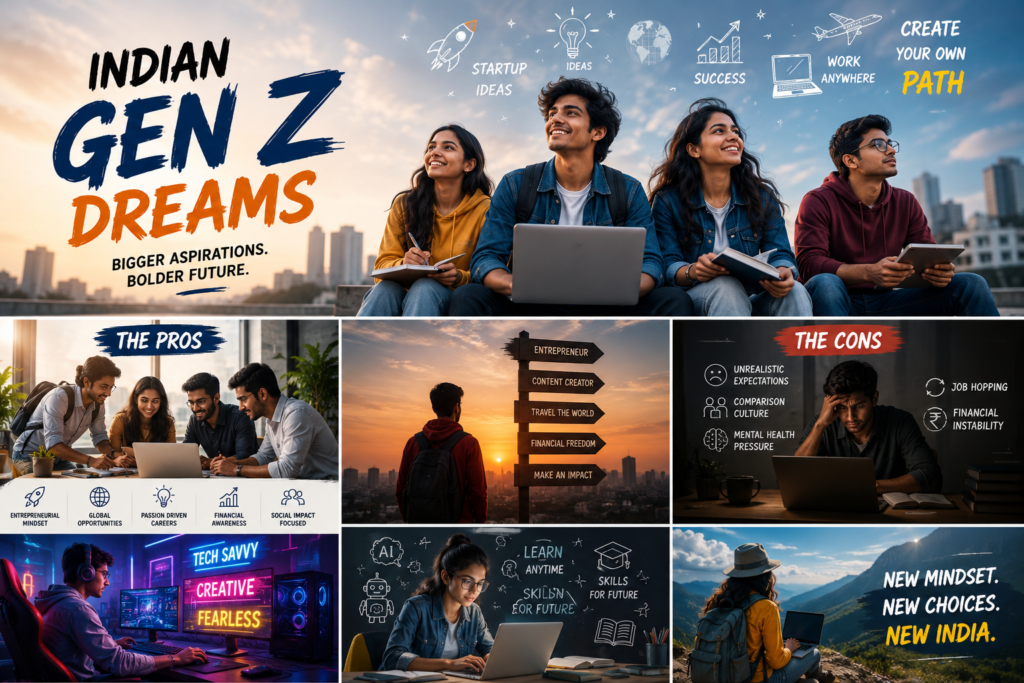
Every generation dreams differently. While Baby Boomers sought stability, Gen X chased security and Millennials embraced globalization, India’s Generation Z is rewriting the rulebook altogether.
Born roughly between 1997 and 2012, Gen Z has grown up with smartphones, social media, artificial intelligence and unlimited access to information. Their dreams are no longer confined to becoming doctors, engineers or government officials. Today, they aspire to be entrepreneurs, content creators, digital nomads, startup founders, esports champions, filmmakers, influencers and global professionals.
But as ambitions soar, so do the challenges.
The New Indian Dream
Unlike previous generations that measured success by a stable salary and a permanent home, Gen Z values freedom, purpose and flexibility.
Many young Indians dream of:
- Launching their own startups before turning 30.
- Working remotely while travelling the world.
- Becoming YouTubers or Instagram creators.
- Building careers in gaming, AI and digital marketing.
- Earning through multiple income streams instead of one job.
- Achieving financial independence at an early age.
For Gen Z, success is not just about money—it’s about creating an identity.
The Bright Side: Why These Dreams Matter
1. Innovation Over Tradition
Young Indians are embracing entrepreneurship like never before. They are willing to experiment with ideas instead of waiting for conventional employment.
This mindset fuels innovation and creates new opportunities for the economy.
2. Global Opportunities
Technology has removed geographical barriers.
A software developer in Kochi can work for a company in California, while a designer in Jaipur can freelance for clients in Europe.
The world has become their workplace.
3. Passion-Driven Careers
Unlike earlier generations forced into predetermined professions, Gen Z often chooses careers based on passion.
Music, photography, gaming and filmmaking are no longer considered hobbies but viable professions.
4. Better Awareness
Mental health, gender equality, climate change and social justice are subjects Gen Z openly discusses.
They are more willing to challenge outdated norms and demand accountability.
5. Financial Literacy
Many youngsters begin investing in mutual funds, stocks and SIPs while still in college, showing greater awareness of wealth creation than previous generations.
The Flip Side: The Hidden Costs
1. Unrealistic Expectations
Social media often showcases overnight success stories while hiding years of struggle.
Many young people expect rapid wealth and fame, leading to disappointment when reality proves different.
2. Comparison Culture
Instagram and LinkedIn have created an environment where achievements are constantly compared.
Seeing peers travel abroad or buy luxury cars can trigger anxiety and feelings of inadequacy.
3. Job-Hopping
Gen Z values growth but often switches jobs frequently.
While flexibility has advantages, excessive job changes may hinder long-term skill development and employer confidence.
4. Financial Instability
Choosing passion projects without adequate planning can lead to inconsistent income and financial stress.
The pursuit of dreams must be balanced with practical considerations.
5. Mental Health Pressure
The pressure to succeed early, stay relevant online and constantly outperform peers has contributed to rising stress, burnout and anxiety among young professionals.
Parents vs Gen Z: A Clash of Perspectives
Many Indian parents still prioritise secure careers in medicine, engineering or government service.
Gen Z, on the other hand, often values happiness over hierarchy and creativity over convention.
This generational conflict is not merely about careers—it reflects changing definitions of success.
Technology: Friend and Foe
Artificial Intelligence has empowered Gen Z with tools that previous generations never imagined.
Students can learn coding through AI tutors, artists can generate concepts instantly and entrepreneurs can automate businesses.
Yet the same technology also creates uncertainty.
Automation threatens traditional jobs, misinformation spreads rapidly and excessive screen time affects productivity and relationships.
Can Every Dream Become Reality?
Not necessarily.
The internet celebrates exceptional success stories but rarely highlights the countless failures behind them.
Becoming a millionaire influencer or startup unicorn founder is possible—but statistically rare.
The most sustainable path combines ambition with preparation, creativity with discipline and dreams with resilience.
The Verdict
Indian Gen Z is arguably the most ambitious generation the country has ever seen.
Its members are fearless enough to challenge conventions and imaginative enough to create entirely new career paths.
However, ambition without patience can become frustration, and freedom without responsibility can become instability.
The real strength of Gen Z lies not in dreaming differently, but in learning to balance aspiration with perseverance.
Because in the end, success is not defined by viral fame or instant wealth.
It is defined by building a meaningful life that endures long after the trends have changed.
Quick Snapshot: Pros & Cons of Indian Gen Z Dreams
| Pros | Cons |
|---|---|
| Entrepreneurial mindset | Unrealistic expectations |
| Global career opportunities | Social media comparison |
| Passion-driven professions | Frequent job-hopping |
| Better awareness of social issues | Financial uncertainty |
| Early financial literacy | Mental health challenges |
| Tech-savvy and innovative | Overdependence on digital validation |
Final Thought:
India’s Gen Z is not merely dreaming bigger—it is dreaming differently. The challenge is not to stop dreaming but to ensure those dreams are supported by skills, patience and resilience. If that balance is achieved, this generation could redefine India’s future in ways no previous generation has imagined.
